
The Armenian community in Israel has become more resilient to wartime situations: Chernamorian shares details from Petah Tikva
Author: Manvel Margaryan
Source: Armenpress, https://armenpress.am/hy/article/1244541
Due to the ongoing military operations in the Middle East, the situation remains tense. In particular, the Armenian community in Israel is not witnessing wartime conditions for the first time and has already become more resilient.
In an interview with Armenpress, Artiom Chernamorian, The head of the “Nairi” Union of Israeli Armenians of Petah Tikva, provided information about the situation in Israel and also addressed the functioning of the Armenian community under the current difficult conditions.
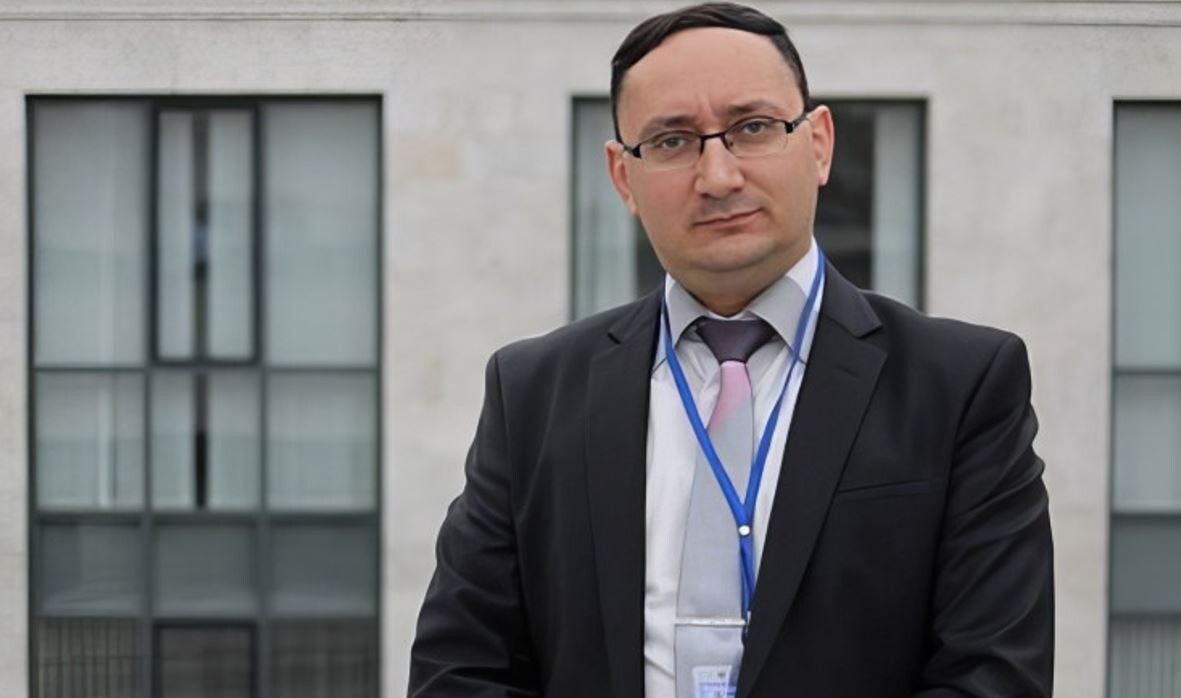
“The situation remains tense. The northern regions of Israel, where around 3,000 Armenians live scattered across different localities, have been subjected to particularly intense rocket attacks. An Armenian church also operates in the city of Haifa. Fortunately, our well-organized community is strong and cohesive, as this is not the first time it has faced the hardships of war. Back in 2006, Hezbollah was firing rockets at Israeli territory. Later there was the 12-day war, and now we are confronting this new challenge. Hezbollah has already launched about 300 rockets toward the northern and central regions of Israel,” Chernamorian said.
Chernamorian added that Armenians also live in Jerusalem. However, relatively fewer rockets are fired toward that city, and air-raid sirens there sound about six or seven times a day, rather than 15–16 times as in other localities. In the first days of the war, sirens in northern and central Israel were heard 17–18 times daily. The Armenian Patriarchate of Jerusalem continues its normal activities, which are naturally followed closely by all Israeli Armenians.
“Fortunately, there are no casualties or injuries among members of the Armenian community. As for material losses, no Armenian speaks about them during wartime. For us, human life is important, not the loss of a car or a house. The authorities are ready to cover all expenses. Israel has an insurance system in place. Compensation may not come immediately, as it requires some time, but material losses are certainly reimbursed,” our interlocutor explained.
He added that Israel has a well-functioning warning system. Sirens sound in advance, giving residents several minutes to take shelter in nearby bomb shelters. Usually, after the alarms, localities are subjected to mass rocket fire. The city of Petah Tikva was also shelled yesterday.
“At that moment, life seems to come to a halt. People go down to bomb shelters, from where the sound of rockets exploding in the air can be heard. Iran is also using ballistic cluster missiles. The situation is particularly difficult for children. Adults continue to work, while children stay at home. We do everything possible to ensure that at least one adult is always with them. The government has developed a program under which parents with children under the age of 14 can work under limited conditions and receive up to 75 percent of their salary from the insurance service while staying home with their young children. Psychologically, of course, it is very difficult. The most terrifying moment is when a rocket with a 600-kilogram warhead falls onto populated areas from a height of 100 kilometers, not to mention cluster submunitions that explode and scatter lethal fragments within a radius of two to three kilometers. It is terrifying if people are in open areas at that moment and have no place to take shelter quickly. They simply lie on the ground and cover their heads. But even then, there is no guarantee they will not be injured by the explosion of cluster submunitions,” said the head of the “Nairi” Union of Israeli Armenians of Petah Tikva.
According to him, many localities in Israel have old buildings that lack bomb shelters. Therefore, municipal authorities have built such structures in certain areas, located up to 200 meters from residential zones. There are also public shelters intended for people who happen to be outside during rocket attacks but can quickly take refuge in nearby facilities. These shelters have the necessary conditions for staying there for some time.
In the 1980s, buildings in Israel were constructed according to designs in which one room in every apartment is fortified, with double-thick concrete walls. During alarms, especially those living on higher floors who do not have time to immediately reach a shelter can take refuge in these rooms.
“The building where my family lives fortunately has a bomb shelter designed for 16 people. It is not very large, but it has a restroom and a constant water supply. I serve as the head of our building’s residents’ association, and together with the residents we have managed, at our own expense, to create comfortable conditions in our shelter. People can eat and stay there for some time. We have installed a ventilation system and cameras so we can see who approaches and decide whether to open the door or keep it closed. Israel is one of the leading countries in the world in terms of civil defense, where every citizen knows where to go and how to protect themselves in case of emergency,” Chernamoryan said.
From the first days of the war, there has been a noticeable rise in the prices of food and other goods. However, according to our interlocutor, there is no shortage of food. People order groceries from home and receive them through delivery services. Public transport, shops, and restaurants continue to operate normally. Internet connections have not been disrupted, although a certain level of censorship exists, under which photographing rocket strike sites and posting those images online is prohibited. Fuel prices, however, have increased significantly.
“Israel is spending enormous sums during these days of war. Each time, about 400 aircraft carry out combat sorties—200 heading toward Lebanon and the other half toward Iran. More than 10,000 units of various types of munitions have been used since the start of military operations, each capable of causing the collapse of a building or striking a strategically important facility. It is clear that military expenditures amount to billions of dollars. The realization that people are dying around you is terrifying. There are already dozens of fatalities and more than 1,700 wounded,” said the head of the “Nairi” Union of Israeli Armenians of Petah Tikva.
Local Armenians are deeply concerned about the fate of their compatriots living in different parts of the country. Despite the tense situation, there is no panic among Israeli Armenians, nor a desire to emigrate. Armenia’s embassy operates here. Although the country’s airspace is closed, people are not completely cut off. It is possible to travel by land to Egypt or reach Cyprus by sea.
“The Armenian community in Israel has already witnessed wartime situations and has become more resilient. War has brought no benefit to anyone. We are more concerned about the safety of our children and the difficult socio-economic situation. Added to this are psychological suffering and emotional hardship. Despite all this, Armenians remain resilient. We are also thinking about our compatriots living in Iran. God willing, we will get through this ordeal without casualties,” Chernamorian concluded.


