The large-scale restoration and archaeological research project at the Church of the Holy Sepulchre (Church of the Resurrection) continues.
On Tuesday, September 8, 2026, a meeting dedicated to the ongoing restoration work and archaeological research at the Church of the Holy Sepulchre was held at the Saint Saviour complex in Jerusalem.
The meeting was attended by representatives of the three communities holding rights (the Status Quo) in the Church of the Holy Sepulchre: Representative of the Armenian Patriarchate of Jerusalem, His Grace Bishop Koryun Baghdasaryan; the Greek Orthodox Patriarch of Jerusalem, His Beatitude Theophilos III; and the Custos of the Holy Land, the Reverend Father Francesco Ielpo. Also present were the Inspector of the Church of the Holy Sepulchre, Very Reverend Father Ghevond Hovhannisyan; the Chancellor (Divanapet), Very Reverend Father Aghan Gogchyan; and the Secretary of the Apostolic Nunciature, Monsignor Nicola Di Ponzio.
During the meeting, the progress of restoration work and archaeological research at the Church of the Holy Sepulchre, the completed works, the results achieved, and future plans were presented.
In his remarks, Custos of the Holy Land Father Francesco Ielpo emphasized that the Church of the Holy Sepulchre is one of the most important and, at the same time, most delicate holy sites in the Christian world. He stressed the importance of cooperation among the three Status Quo communities, noting that the work is carried out in a spirit of mutual trust, dialogue, and collaboration.
He also noted that the ongoing project unites three main pillars: conservation, research, and witness.
Special mention was made of the collaboration with Sapienza University of Rome, which plays a pivotal role in the scientific and archaeological work of the project. According to Father Ielpo, this experience demonstrates that scientific research and the preservation of a holy site can proceed in harmony when grounded in trust, dialogue, and shared responsibility.
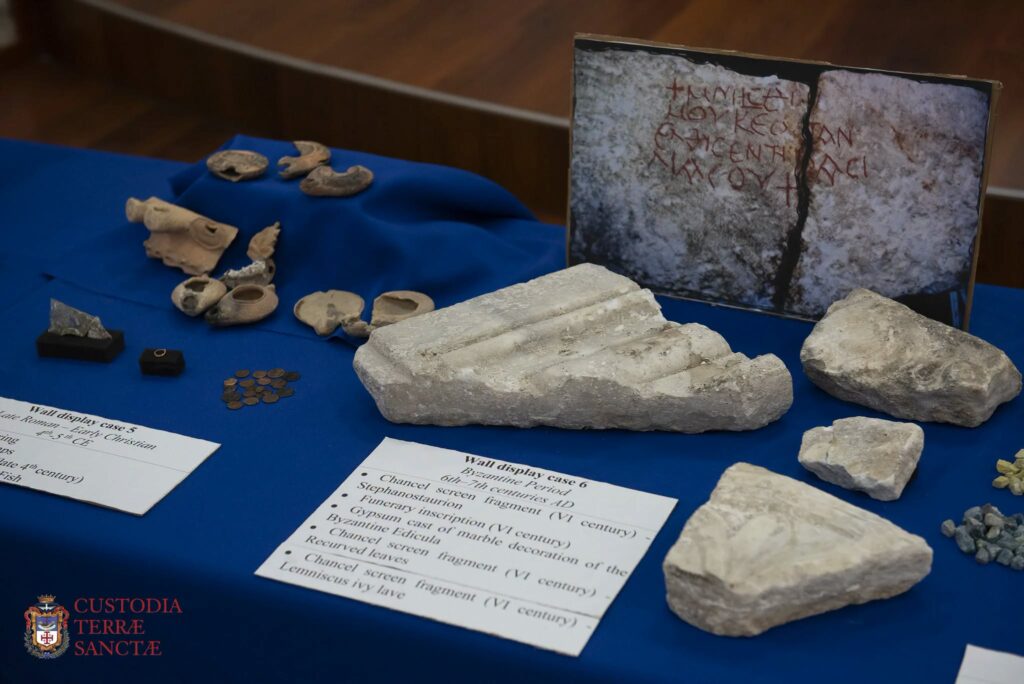
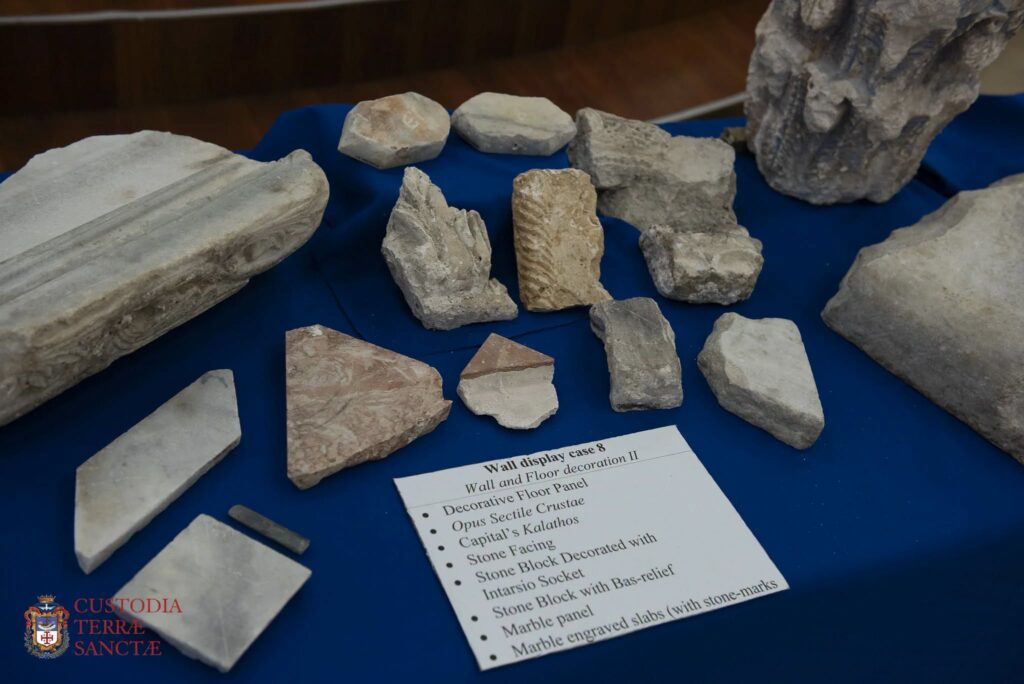
This collaboration between scientific and ecclesiastical institutions was also emphasized by the presence of the Rector of Sapienza University, Prof. Antonella Polimeni. Appreciation was likewise expressed for the consistent work of Prof. Francesca Romana Stasolla and her team of archaeologists and researchers, which is of critical importance to the scientific success of the project.
Archaeological research continues through the examination of discovered artifacts and collected data. Researchers are reconstructing the various historical stages of the Church of the Holy Sepulchre compound, starting from the ancient quarry, through the Second Temple and Roman periods, up to the founding of the Christian church and its subsequent history. Concurrently, restoration work is progressing. Infrastructure work coordinated by Manens S.p.A. has already been completed in most areas of the church. Coordinated by the Conservation and Restoration Center “La Venaria Reale” Foundation, the installation of the restored flooring continues, having already been completed in about one-third of the church’s area.
During the meeting, the restoration of the main wooden entrance door of the Church of the Holy Sepulchre, led by Roberto Sacuman, was also presented.
The initial results of the archaeological research have been compiled in the volume: “Hagia Polis Project. Excavations at the Holy Sepulchre in Jerusalem. Volume I. Project and Methodology.”
This extensive project at the Church of the Holy Sepulchre is not only an important scientific and conservation initiative, but also a living testimony to the cooperation between the three Status Quo communities and the scientific community.
The uniqueness of the Church of the Holy Sepulchre lies also in the fact that it is not merely an archaeological monument, but a living holy place—a center of Christian faith and witness to which pilgrims arrive from all corners of the earth, and where sacred ceremonies commemorating the Passion, Crucifixion, Death, and Resurrection of our Lord Jesus Christ are continuously performed.


